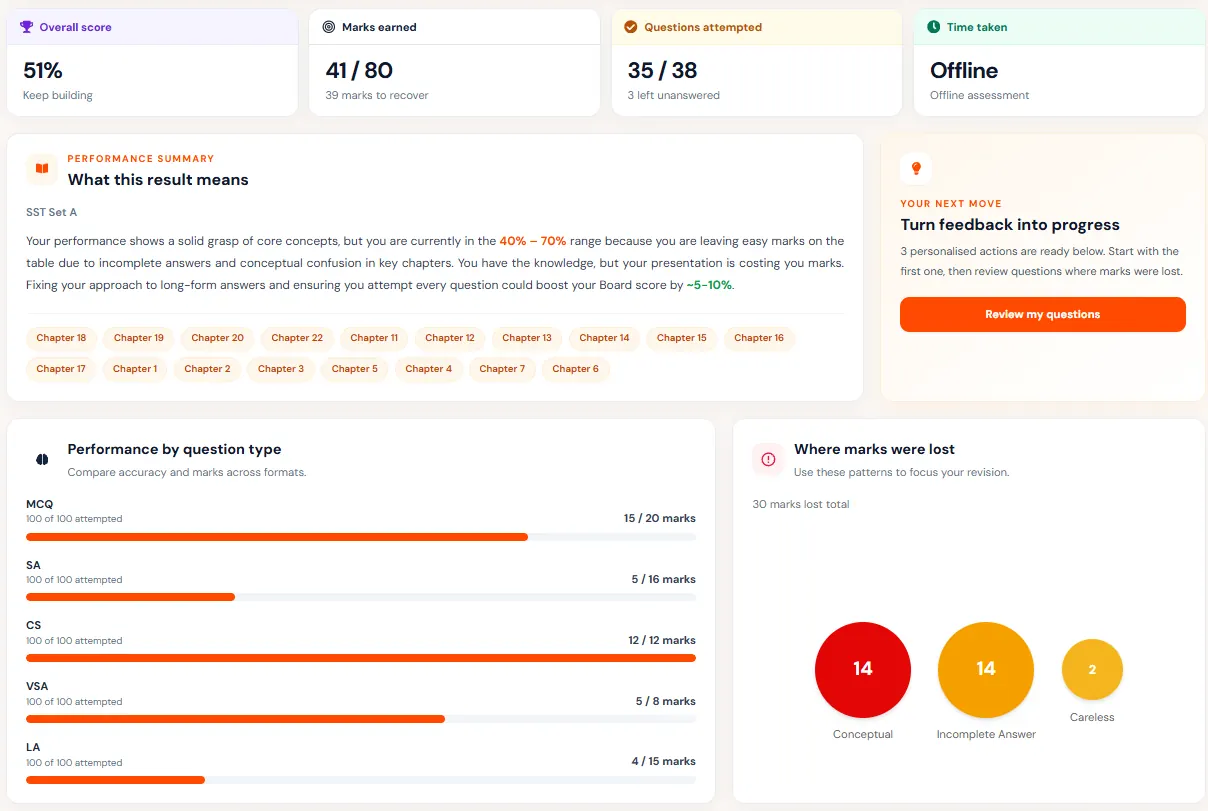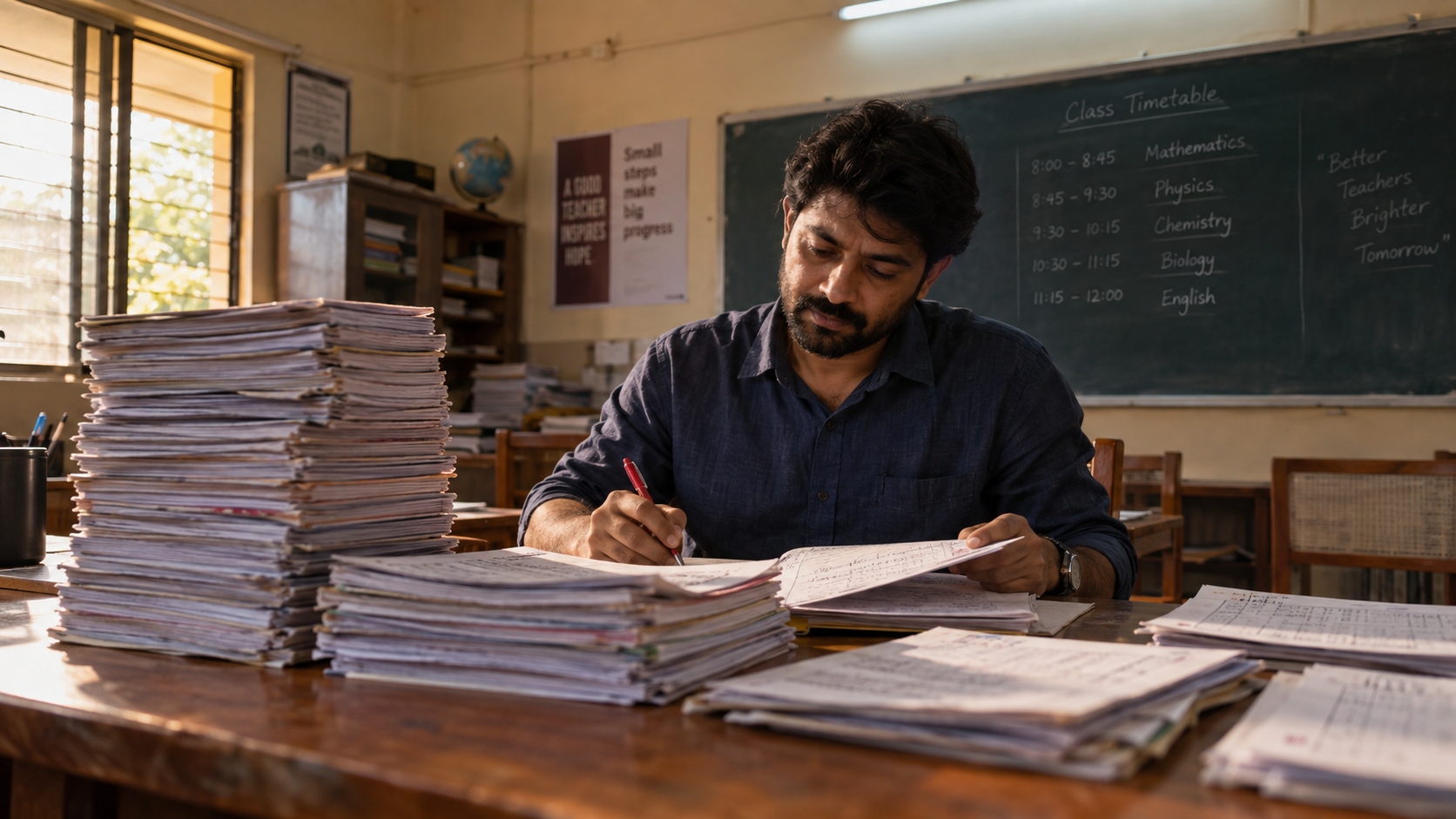
As educators and school administrators, we have all encountered that answer sheet. You know the one—where the student clearly grasps the concept, but their penmanship under exam pressure looks less like English and more like an encrypted code.
For decades, the sheer variability of human handwriting has been the primary barrier to fully automating exam administration. While OMR sheets handled objective questions, subjective answers—the core of CBSE and ICSE curriculums—remained stuck in the manual era. The common consensus was: 'Computers can’t read bad cursive.'
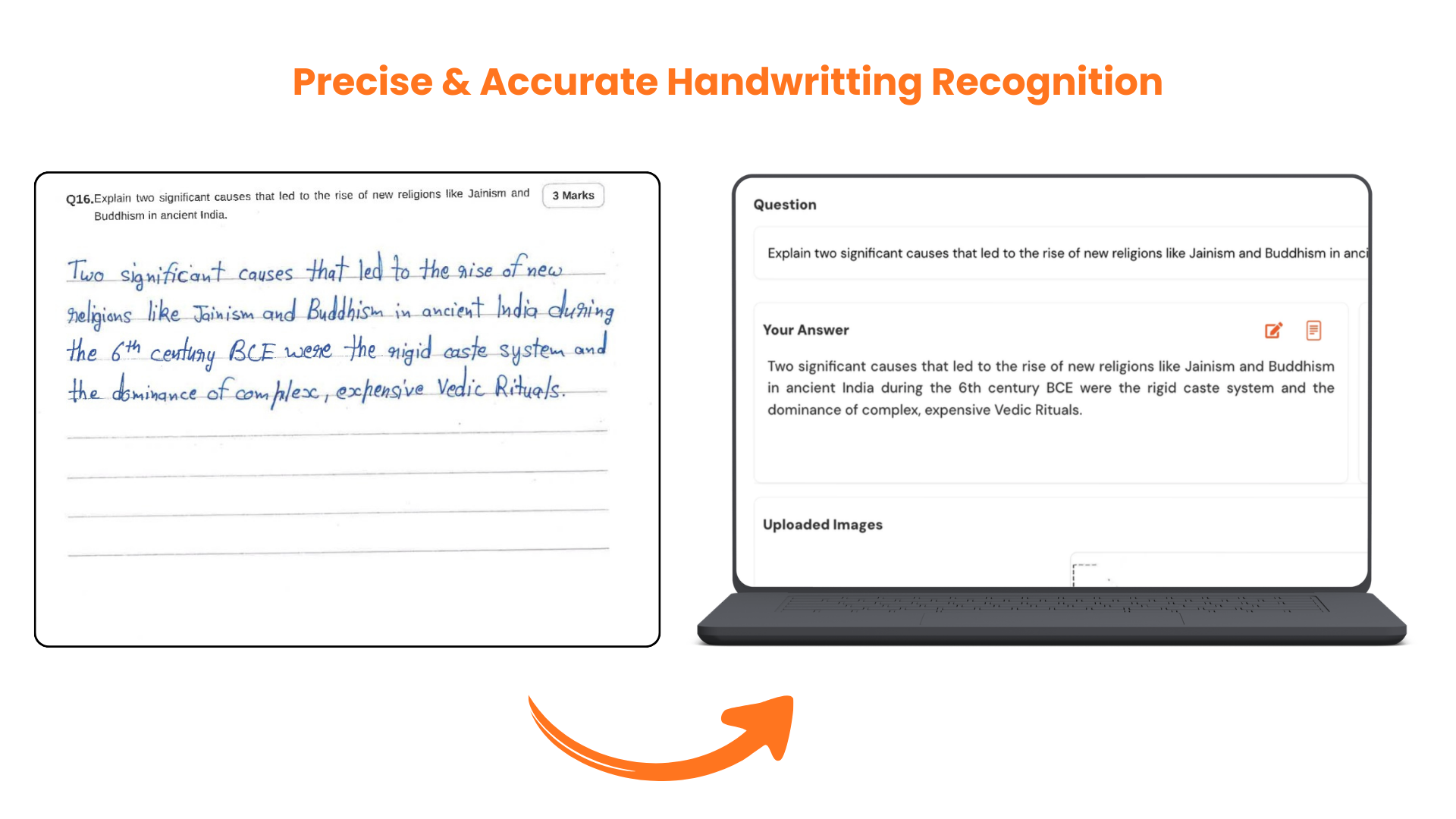
We are here to update that consensus. The technology has fundamentally shifted. We are no longer talking about basic scanning; we are talking about sophisticated AI-powered Handwritten Text Recognition (HTR) that is hitting a real-world benchmark of 95% accuracy.
The Failure of 'Old-School' OCR
To understand the breakthrough, we must understand the previous limitation. Traditional Optical Character Recognition (OCR) works perfectly for printed text. Scan a textbook page, and it reads every word. But feed it a rushed, handwritten student essay, and it fails spectacularly because it looks at characters in isolation. If a hurried 'a' looks slightly like a 'u', a standard computer misreads it. It lacks human intuition.
The 'New Gen' Difference: Contextual AI Evaluation
Our exam automation engine doesn't just 'see' pixels; it 'reads' context. It utilizes advanced Computer Vision combined with Natural Language Processing (NLP) to perform intelligent AI checking. Here is how it tackles the chaos of a real classroom answer sheet:
1. Reading the Sentence, Not Just the Letter
Imagine a student writes: 'Photosynthesis requires sunlight.' If the word 'sunlight' is scrawled messily, a standard scanner will output gibberish. But our AI evaluation system understands the context of biology. It knows that photosynthesis requires sunlight, not sumlight. It uses context to predict and decipher the messy word, mirroring how a human teacher intuitively reads.
2. Trained for the 'Indian Classroom'
Indian students have diverse writing styles—from rigid cursive to modern print-script hybrids. Our system is trained specifically on vast datasets of handwritten samples from Indian demographics. It recognizes common Indian academic abbreviations, strikethroughs, and even marginalia. This specialized training is crucial for accurate Handwritten Checking in our schools.
The 95% Accuracy Benchmark & The 'Human Safety Net'
We talk about 95% accuracy as the standard for high-confidence AI checking. But as a Principal, you are rightly concerned about the other 5%. What if the AI gets it wrong?
This is where our platform builds trust. When the handwriting is truly illegible, the AI doesn't guess. It flags that specific answer and routes it to a human teacher for review. This 'Human-in-the-Loop' model ensures that AI evaluation remains fair. No student is penalized for bad handwriting, yet the school still automates the vast majority of the grading load.
Why This Matters for Your School’s Operations
Moving to an AI-assisted model for subjective answers isn't just about adopting cool tech; it's an operational upgrade. It ensures Speed (results are declared in days rather than weeks), Unbiased Fairness (the quality of handwriting doesn't influence the marks given), and Data Integrity (turning scribbles into searchable, digital insights).
Conclusion: The Future is Legible
The days of teachers ruining their eyesight squinting at papers late into the night are numbered. With reliable technology now achieving 95% accuracy in recognizing handwritten text, we can finally bridge the gap between traditional pen-and-paper exams and digital efficiency.
It is time to trust the tech, reduce the drudgery of manual Handwritten Checking, and let the AI decipher the scribbles so your teachers can focus on the students.