Less time checking.
More time teaching.
Turn handwritten answer sheets into marks, clear feedback and a view of what your students need next—with teachers in control.
Class tests · Term exams · Pre-board practice
Class tests · Term exams · Pre-board practice
Your papers
Start with the assessments you already use.
Your teachers’ judgement
Review marks and the reasons behind them.
Your next lesson
Use the gaps to guide follow-up teaching.
After every assessment
The papers pile up. The next lesson can’t wait.
Checking follows teachers home.
Each answer needs reading, marking and an explanation—on top of planning the next class.
A score leaves questions unanswered.
Students see what they scored. They still need to understand what to improve.
Totals hide the learning gaps.
School leaders need to see which classes and topics need attention, beyond the overall result.
For teachers
A first pass at checking. A clearer starting point for teaching.
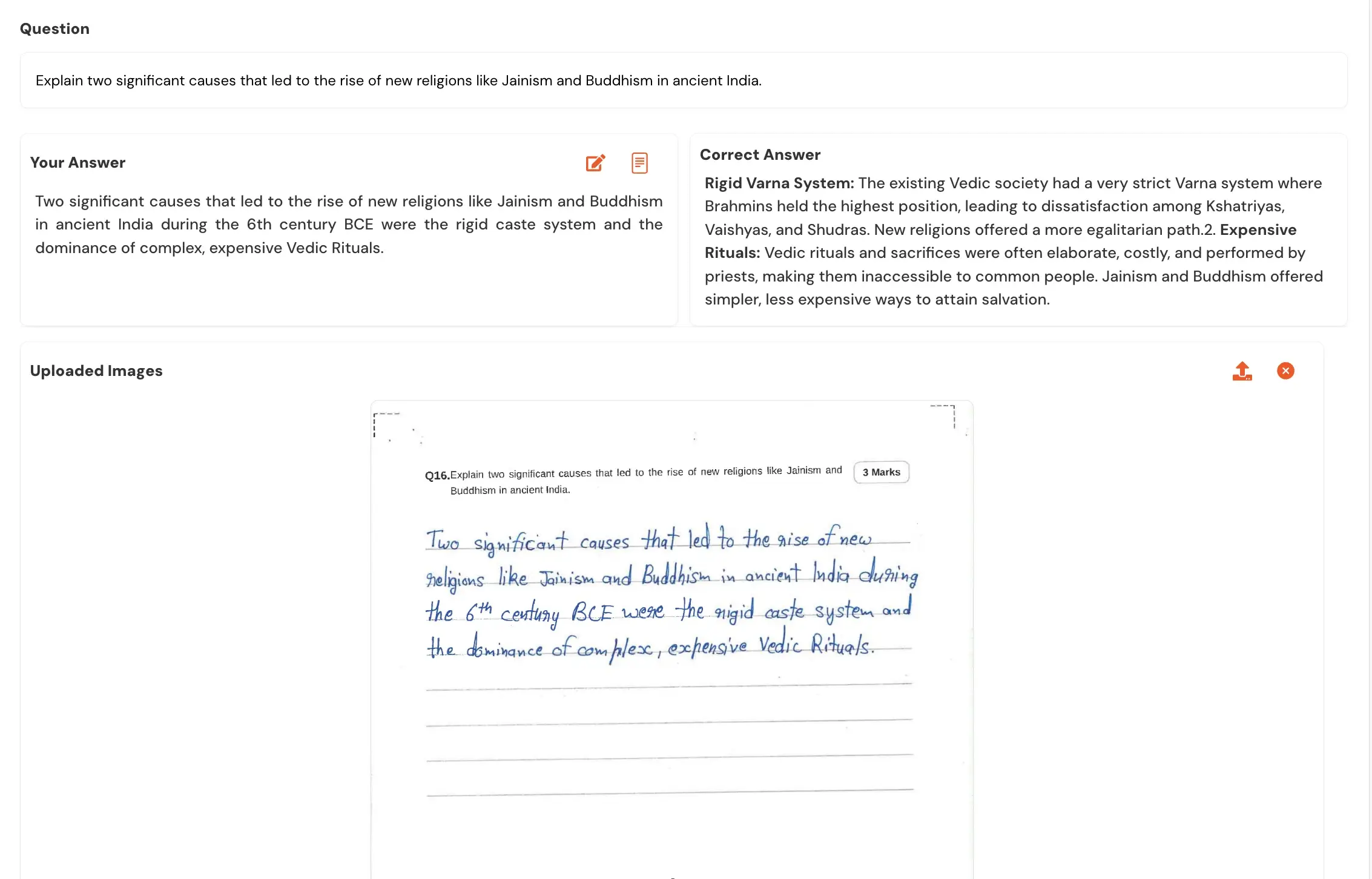
Chanakya evaluates the written response. Your teachers review the reasoning and decide what happens next.
Credit the working
Award partial marks for correct steps under your marking scheme.
Make deductions useful
Show the missing step or explanation, so feedback points to something a student can practise.
Keep teachers in the loop
Review suggested marks and feedback against your school’s expectations.
Beyond “incorrect”.
From evaluated student work · identifiers removed
What the student got right
The method and the first two steps.
Where the answer went wrong
A sign error in the final calculation.
What to practise next
Check signs before simplifying the final line.
Correct working can still earn credit, according to your marking scheme.
Explore answer checking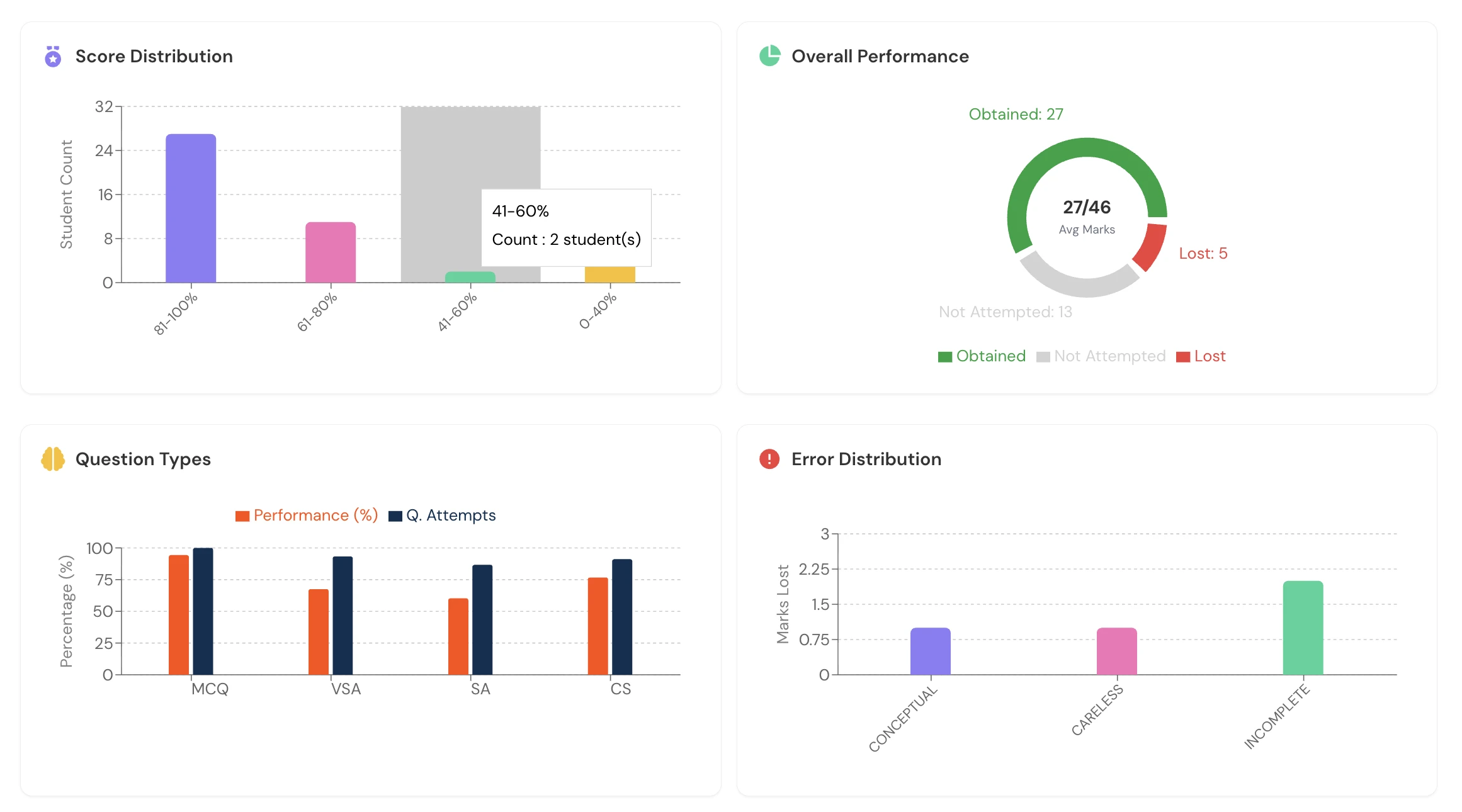
For academic leaders
See where the class needs you next.
Make academic reviews about what to do next, with question-wise results and patterns in student errors.
- Which questions need another explanation?
- Who needs support with the underlying concept?
- What should teachers revisit before the next assessment?
One class. One paper. A practical place to start.
See how it works with your teachers before expanding across the school.
- 01
Choose one class
Pick a familiar test and share the paper and marking scheme.
- 02
Share sample sheets
Agree on scanning and upload requirements with our team.
- 03
Review with teachers
Check the marks, deductions and feedback against their judgement.
- 04
Decide the next step
Use what you learn to plan follow-up teaching and assess the fit.
Before your school starts.
Can we use our school’s own question papers?
Yes. Start with a question paper, its marking scheme and a sample of handwritten answer sheets. Your teachers can then judge the evaluation against a test they already know.
Which boards, classes and subjects can we try?
Share your board, class, subject and question formats with us. We’ll check the fit using your actual papers and agree on the scope before the pilot.
Can students receive marks for correct working?
Yes. Partial credit follows the marking criteria. Correct intermediate steps can earn marks even when a later step or the final answer is incorrect.
Where do teachers stay involved?
Teachers review the suggested marks and explanations against their marking criteria. They use their judgement to decide what needs attention and how to follow up in class.
What does a school pilot involve?
We evaluate an agreed sample of your answer sheets using your question paper, then review the results with your academic team. Sample size, turnaround and commercial terms are agreed before starting.
Bring a paper your teachers already know.
Let’s evaluate a sample of your school’s answer sheets and review the marks and feedback with your academic team.
Your question paper · Your marking scheme · Your teachers’ review