Published: March 9, 2026
Updated: March 9, 2026
Categories: Artificial Intelligence, Personalized Learning, Education Technology
The Structural Gap in Indian Schools
Indian schools have rapidly adopted digital teaching tools such as LMS platforms, recorded lessons, online assignments, and smart classrooms. But the most important form of assessment in the country has not evolved at the same pace.
CBSE and ICSE board exams still remain handwritten, step-based, and presentation-sensitive. Marks are awarded not only for conceptual correctness, but also for visible working, structure, keywords, clarity, and format.
This creates a serious academic mismatch.
Students may learn in digital environments, but their final performance is judged through pen-and-paper answers. At scale, this is no longer just a classroom issue. It becomes an institutional challenge for school leaders.
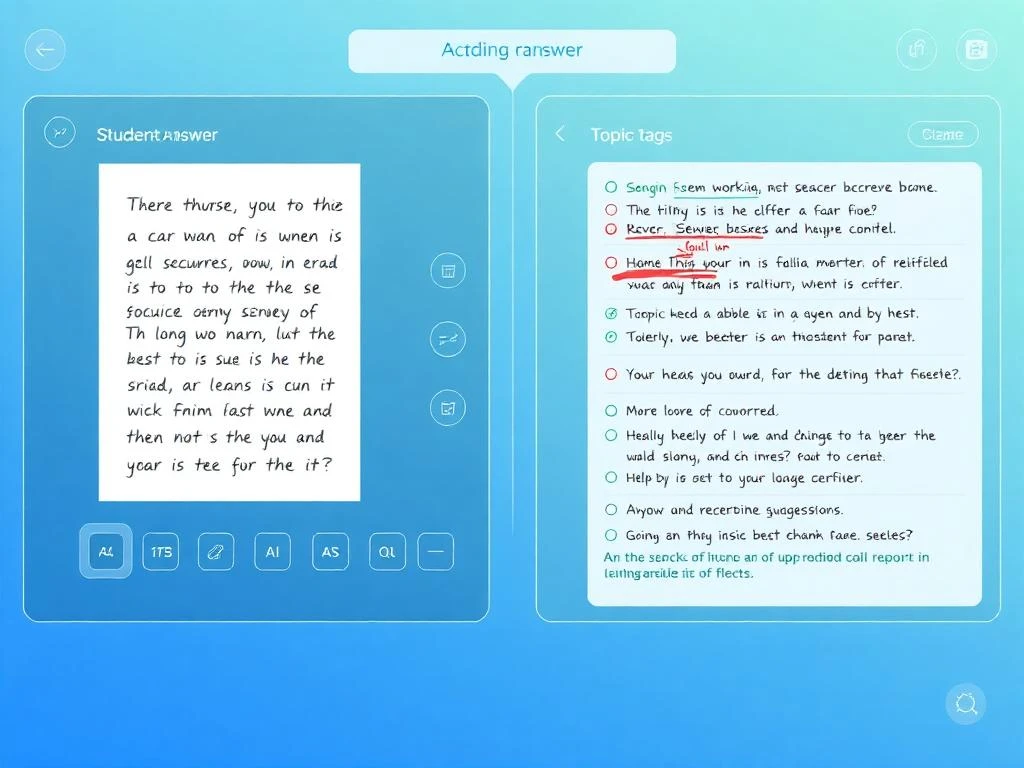
Chanakya AI addresses this gap by helping schools strengthen handwritten practice, evaluation consistency, and mastery tracking in a way that aligns with how board exams are actually written and assessed.
Why This Gap Matters More Than Ever
Across Indian schools, instruction is increasingly digital, but board outcomes still depend on handwritten execution.
When schools do not address this gap systematically, the consequences appear across several areas:
Marks and Results
Students often lose marks not because they do not understand the concept, but because they skip steps, miss keywords, write weakly structured answers, or present their work poorly.
Academic Integrity
As digital learning expands, copied responses and AI-assisted work become harder to detect. Handwritten responses remain one of the clearest ways to assess authentic understanding.
Student Confidence
Many students perform well in online quizzes but struggle in written exams. This creates anxiety and unpredictability during school assessments, pre-boards, and final boards.
School Performance Metrics
Board averages, subject-level outcomes, and section-wise trends suffer when writing discipline and step-wise answer quality are not systematically trained and measured.
This is why handwritten evaluation is no longer something schools can treat informally. It must become part of academic infrastructure.
The Real Operational Challenge for Schools
Principals and academic leaders already know that handwritten performance matters. The challenge is not awareness. The challenge is execution at scale.
Most schools operate with large class sizes, multiple sections, limited teacher bandwidth, and heavy academic responsibilities. Teachers are expected to complete the syllabus, conduct tests, check notebooks, support weak students, manage parent communication, and maintain school documentation.
In that environment, consistent, detailed, exam-aligned notebook checking becomes difficult.
Even highly capable teachers face the same operational barriers:
-
Deep correction takes time
-
Feedback often gets delayed
-
Checking quality may vary due to workload and fatigue
-
Pattern recognition across hundreds of notebooks becomes nearly impossible
-
Personalized remediation at scale is extremely difficult to sustain manually
This is not a reflection of teacher quality. It is a reflection of scale.
Chanakya AI is built to support this exact problem by strengthening the evaluation layer without interfering with classroom teaching.
Why Online Practice Alone Is Not Enough
Online practice has value. It improves revision speed, increases question exposure, and helps students cover syllabus faster.
But board exams do not reward recognition alone. They reward production.
Students are not asked to choose the right answer. They are asked to write it clearly, logically, and in a board-friendly format.
That means real exam performance depends on:
-
step clarity
-
complete working
-
answer structure
-
logical sequencing
-
correct terminology
-
keyword usage
-
proper diagrams, labels, and units where needed
-
neat presentation
This is where many digital-only preparation systems fall short.
The issue is not lack of content. Most schools already have good teachers, good resources, and enough syllabus support. The real issue is the absence of a strong handwritten practice and feedback loop.
That is the gap Chanakya AI is designed to close.
How Chanakya AI Supports Board-Aligned Handwritten Evaluation
Chanakya AI is not positioned as a replacement for teachers. It is designed as an academic support layer that helps schools make handwritten evaluation faster, more consistent, and easier to scale.
What Chanakya AI enables
Board-aligned handwritten evaluation
Responses are evaluated in a way that reflects real board-style expectations, including step-based marking logic and presentation sensitivity.
Step-wise answer analysis
The system does not focus only on the final answer. It checks process, method, structure, and visible reasoning.
Concept-level mistake detection
Repeated misunderstandings and weak areas can be identified earlier instead of surfacing only during pre-boards.
Presentation and structure feedback
Students receive feedback not only on correctness but also on clarity, sequencing, layout, and required board-style expression.
Faster feedback cycles
Students get timely input while their thinking is still fresh, making correction and improvement far more effective.
Targeted remediation support
Instead of generic revision, students can be guided toward the exact topics or question types where they need more practice.
A Simple School Workflow
Chanakya AI fits into the existing school workflow in a practical way:
-
The student writes answers by hand in a notebook or on paper
-
The answer sheet is uploaded as an image or PDF
-
Chanakya AI evaluates the response using board-aligned criteria
-
The student receives detailed feedback on steps, concepts, and presentation
-
Schools can assign targeted practice based on the identified gaps
This creates a repeatable improvement loop that supports real exam readiness.
What Principals and Academic Leaders Gain
The strongest value of Chanakya AI is not just faster checking. It is institutional visibility and consistency.
With Chanakya AI, schools can move toward:
Uniform evaluation standards across sections
Reduce variability in correction quality and ensure students are trained against the same expectations.
Reduced correction burden on teachers
Free up teacher time for teaching, mentoring, classroom support, and targeted intervention.
Faster student feedback loops
Improve the cycle of practice, correction, and reinforcement.
Topic-wise mastery tracking
Understand where students are improving, where they are stuck, and which topics require academic attention.
Early warning indicators
Identify weak students and weak concepts before they become board-level problems.
Data-backed remediation planning
Make stronger academic decisions based on evidence rather than intuition alone.
This is where evaluation shifts from being a routine correction task to becoming part of a school’s strategic academic system.
From Evaluation to Mastery
When evaluation is delayed or inconsistent, schools become reactive. Weaknesses are identified late. Remediation becomes rushed. Teachers spend more time fixing accumulated problems instead of building strong understanding early.
Chanakya AI helps schools shift from reactive correction to proactive mastery building.
Because handwritten responses are checked consistently and step-wise, schools can:
-
catch concept gaps earlier
-
identify recurring answer-writing mistakes
-
strengthen weak topics while a chapter is still being taught
-
monitor improvement over time
-
make practice more intentional and measurable
This allows schools to create a more reliable academic loop:
Practice -> Feedback -> Correction -> Reinforcement -> Mastery
That is where scalable personalization becomes possible.
Unlimited Practice Without Unlimited Teacher Burden
In most schools, the biggest limitation is not intent. It is correction capacity.
Teachers want students to practice more. Schools want stronger board outcomes. But handwritten practice at scale usually creates a bottleneck because every extra worksheet also means extra correction.
Chanakya AI removes that bottleneck.
With Chanakya AI, schools can support:
-
more handwritten practice without proportionally increasing checking load
-
repeated attempts and rework
-
faster evaluation turnaround
-
targeted feedback for each student
-
measurable progress over time
-
stronger revision loops before board exams
This allows schools to expand practice intensity while keeping handwriting and board alignment at the center.
The Hybrid Model Schools Actually Need
The future for CBSE and ICSE schools is not fully digital learning alone. It is a hybrid academic model that respects how Indian board exams really work.
The four-part model looks like this:
1. Teacher-led instruction
Teachers continue to lead concepts, explanation, strategy, and classroom engagement.
2. Handwritten student execution
Students practice in the same format in which they will ultimately be assessed.
3. AI-supported evaluation
Chanakya AI adds consistency, speed, and scalability to handwritten answer checking.
4. Data-driven remediation
Schools use performance patterns and mastery signals to guide intervention and practice.
This model does not disrupt the classroom. It strengthens it.
The Real Leadership Question
As digital instruction becomes normal in Indian schools, the most important question is no longer whether technology is present.
The real question is this:
Are students only learning digitally, or are they being systematically prepared for handwritten board performance?
Because in the end, board results still depend on what students can produce on paper.
Chanakya AI helps schools build a stronger bridge between digital learning and handwritten exam excellence by making evaluation more consistent, feedback more immediate, and readiness more measurable.
This is not about replacing teachers.
It is about giving schools a stronger academic infrastructure for evaluation, remediation, and mastery tracking.
FAQs
1. What does Chanakya AI do for schools preparing students for board exams?
Chanakya AI helps schools evaluate handwritten answers using board-aligned criteria such as step clarity, correctness, structure, keywords, and presentation. This supports faster feedback and more consistent preparation for handwritten exams.
2. Does Chanakya AI replace teachers or notebook checking?
No. Chanakya AI supports teachers by reducing repetitive correction workload and improving turnaround time. Teachers remain central to instruction, doubt-solving, and academic judgment.
3. Why is handwritten evaluation still so important in CBSE and ICSE schools?
Because board exams still reward handwritten performance. Marks depend not only on conceptual knowledge but also on visible steps, answer structure, presentation, and correct terminology.
4. What kind of mistakes can Chanakya AI identify?
Chanakya AI can help surface missing steps, repeated conceptual errors, weak answer structure, incorrect keyword usage, presentation issues, and format-related gaps in handwritten responses.
5. How does this help principals and academic coordinators?
It gives them better visibility into topic-wise performance, student progress, section-level consistency, and early warning signs, helping them make stronger academic decisions before major exams.
6. Can this work across multiple sections and grades?
Yes. One of the key strengths of Chanakya AI is helping schools standardize evaluation practices across sections while still enabling personalized feedback for students.
7. What does implementation look like in a school?
Schools can begin by using Chanakya AI for selected grades or subjects, especially board-focused classes, weekly written practice, revision cycles, and pre-board preparation workflows.
Closing Note
If your school’s teaching has become more digital but exam success still depends on handwritten performance, the real challenge is not content delivery. It is readiness, consistency, and visibility.
Chanakya AI helps schools bring structure to handwritten practice, strengthen evaluation quality, and turn academic feedback into a scalable system.
That is how schools move from correction to mastery, and from scattered preparation to systematic board readiness.